LM-79 Goniofotômetro Detector Móvel (Espelho Tipo C)
LSG-6000
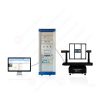
Goniofotômetro de luminária de rotação de alta precisão
LSG-1890B
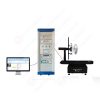
Goniospectroradiômetro de luminária de rotação de alta precisão
LSG-1890BCCD

Goniofotômetro para lâmpadas automotivas e de sinal
LSG-1950
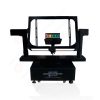
Goniofotômetro para lâmpadas de semáforos (modelo econômico)
LSG-1950S
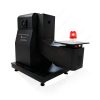
Dispositivo de alerta visual de alarme de incêndio VAD Goniofotômetro
LSG-1930
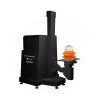
Goniofotômetro para iluminação de aeródromos
LSG-1940
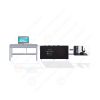
Goniofotômetro compacto
LSG-1200A
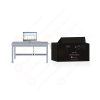
Goniofotômetro LED
LSG-1100
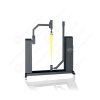
Goniopotômetro com detector de movimento de campo próximo
LSG-1900B
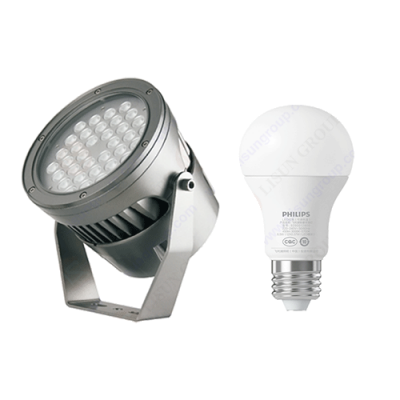 Soluções de teste de LEDs e luminárias
 LM-79 e LM-80 Soluções de teste
 Soluções de teste de driver de LED
 Soluções de teste para eletrodomésticos
 Soluções para testes móveis e de rede
 Soluções para testes de eletrônicos automotivos
 Soluções de teste de áudio e vídeo e TI
 Soluções para testes de cabos e fios
 Soluções de teste de plugues e soquetes
 Soluções de teste de interruptores de energia
 Soluções de teste de transformadores
 Soluções de teste para brinquedos elétricos
 Soluções de teste de medidores de energia
 Soluções de teste de ferramentas motorizadas
Selecione uma organização
para navegar pelos padrões
Sumário
Chloride ions in marine atmosphere and industrially polluted atmosphere are the main cause for failure of metal protection systems. The ASTM salt spray test reproduces salt spray sedimentation, constant temperature & humidity and wet-dry alternating conditions in the laboratory, compressing the corrosion process that would take months to years in outdoor exposure into tens or hundreds of hours. It is applied to accelerate the assessment of salt spray corrosion resistance of metal coatings, organic coatings, electronic components and finished products. This paper sorts out the differences in conditions and severity grades of ASTM B117, B287, B368, G85 and other test protocols. Combined with the structure, temperature and fog control capability of LISUN YWX/Q-010 salt spray test chamber, repeatable test implementation points and typical sample test data are provided, so as to offer acceptance criteria for material selection, process validation and finished product inspection.
1. Introdução
The essence of salt spray corrosion lies in the penetration of chloride ions into the passive film or pores of metal coatings and local acidification. Chloride ions feature small radius and high mobility. They preferentially accumulate at coating pinholes, scratches, welds and coating defects to form micro-galvanic cells and gradually expand towards the substrate. Macroscopically, it presents as white rust, red rust, blistering, peeling and substrate perforation. Failure of coastal outdoor parts, marine components, photovoltaic frames, outdoor cabinets and auto parts can mostly be traced back to this mechanism.
Natural exposure test is authentic, yet it suffers from long cycle and poor reproducibility, which cannot support rapid product iteration. The ASTM salt spray test adopts standardized solution ratio, sedimentation rate and temperature conditions to increase the corrosion rate by dozens of times. Indicators such as “hours to first red rust” and “creepage distance from scratches” become comparable and quantifiable acceptance criteria. This acceleration correlation does not equal the actual service life, but it has been widely adopted in electroplating, coating, connector and finished product industries for process screening and batch consistency control.
2. ASTM Salt Spray Test Method System and Severity Grades
O ASTM salt spray test is not a single method, but a set of test procedures with increasing corrosion intensity. ASTM B117 is the basic neutral salt spray method with mild conditions and the widest application; B287 and B3687 adopt acetic acid and copper salt acceleration respectively for rapid coating screening; G85 introduces cyclic operation, sulfur dioxide and dilute electrolyte and other composite conditions, which are closer to the wet-dry alternation of real atmospheric environment. Table 1 shows the differences among the four methods.

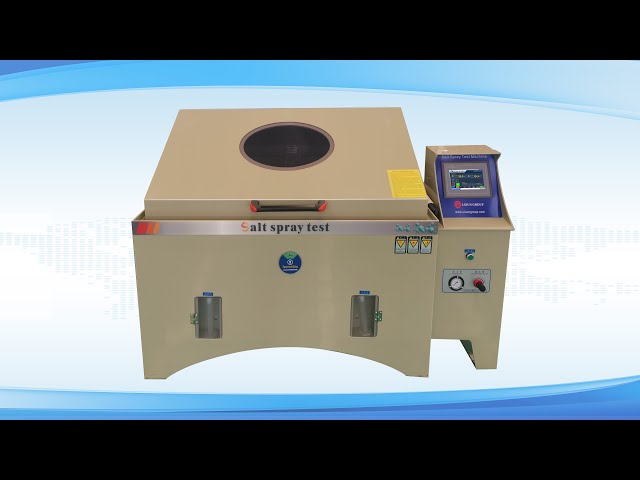
YWX/Q-010_AL
Table 1 Comparison of Common ASTM Salt Spray Test Methods and Conditions
| Método | Solution & pH | Temperatura da Câmara | Spray / Cycle Feature | Aplicação Típica |
| ASTM B117 (NSS) | 5% NaCl, pH 6.5–7.2 | 35 ℃ | Continuous spray, sedimentation 1–2 mL/80 cm²·h | Galvanized parts, coatings, finished enclosures |
| ASTM B287 (AASS) | 5% NaCl + acetic acid, pH 3.1–3.3 | 35 ℃ | Pulverização contínua | Aluminum alloy anodizing, decorative plating |
| ASTM B368 (CASS) | 5% NaCl + acetic acid + CuCl₂, pH 3.1–3.3 | 50 ℃ | Pulverização contínua | Electroplated nickel-chromium, rapid screening of decorative hardware |
| ASTM G85 Annex | Acidified salt spray, synthetic seawater, salt spray/SO₂, dilute electrolyte | Specified in annex | Spray — dry — wet cycle | Automotive parts, outdoor coating systems |
The three core controlled parameters are sedimentation rate, temperature and collected solution pH. B117 requires the average sedimentation over 16 hours to be within 1–2 mL/80 cm²·h. A value below the lower limit leads to slow corrosion and over-optimistic results, while excessive sedimentation causes liquid accumulation and flushing. Both scenarios will damage inter-laboratory comparability. pH shall be measured after the collected solution is equilibrated at 25 ℃ instead of directly testing the prepared solution; otherwise dissolved CO₂ will cause reading deviation.
3. Key Points of Test Implementation
Sample preparation determines the validity of results. Coated and plated samples shall not be manually polished to remove the original surface. Scratch tests shall be cut through to the substrate with a specified cutting edge angle in accordance with ASTM D1654. Samples shall be placed at 20°±5° to the vertical plane to avoid liquid retention on the surface. Samples shall not block the spray from each other or contact the chamber wall. Before formal testing, an empty chamber run of 24 hours shall be performed to verify the sedimentation rate. Pure water is supplemented during testing to compensate evaporation loss. Opening the chamber cover for sampling interrupts the temperature field; sampling shall only be conducted at specified inspection intervals.
Result evaluation shall be carried out hierarchically. For plated samples, record the occurrence time and area ratio of white rust and red rust, and assign protection rating (Rp) per GB/T 6461. For coated panels, evaluate rust grade by ASTM D610, blister grade by ASTM D714 and scratch creepage by ASTM D1654. For electronic assemblies, contact resistance and insulation resistance shall be retested besides visual inspection, because salt spray ingress often causes contact failure before visible corrosion appears.
4. Equipment Implementation: LISUN YWX/Q-010 Câmara de teste de spray de sal
Three core requirements for equipment used in ASTM salt spray test are: corrosion-resistant chamber material, stable temperature field and repeatable spray volume and droplet size. LISUN YWX/Q-010 salt spray test chamber adopts an integrally molded imported corrosion-resistant PP plate chamber without welding seams, preventing saltwater leakage and metal ion contamination from welds. The saturation barrel preheats and humidifies compressed air to avoid excessive evaporation of droplets inside the chamber. Timing range covers 0–9999 hours, supporting continuous, intermittent and programmable cyclic spray. It can complete NSS, AASS, CASS and partial cyclic test methods on one unit. Main technical parameters are listed in Table 2.
Tabela 2 Principais parâmetros técnicos de YWX/Q-010 Câmara de teste de spray de sal
| item | Especificação |
| Working chamber dimension / Volume | 1200×800×500 mm / 480 L |
| Espaço de amostra disponível | 1000 × 600 × 300 mm |
| volume do tanque de salmoura | 32 L |
| Faixa de temperatura da câmara de teste | Temperatura ambiente ~ +55 ℃ |
| Faixa de temperatura de saturação do barril | Temperatura ambiente ~ +70 ℃ |
| Temperature uniformity / Fluctuation | ≤2 ℃ / ±0.5 ℃ |
| taxa de sedimentação por névoa salina | 1–2 mL/80 cm²·h (16 h average) |
| Tipos de teste suportados | NSS, AASS, CASS |
| Suporte de amostras | V-groove and O-round bar, angle 20°±5° |
| Proteção de segurança | Low water level, dual over-temperature, low air pressure audible & visual alarm |
| Power supply / Power | 3-phase AC 380 V/50 Hz, 2.5 kW |
CASS test requires chamber temperature of 50 ℃ and 0.26 g/L CuCl₂·2H₂O additive. The saturation barrel temperature needs to be raised to approximately 65–70 ℃ accordingly. Otherwise, the droplet temperature when reaching samples will be insufficient and the corrosion rate will be low. The maximum saturation barrel temperature of this model at +70 ℃ perfectly meets this working condition. Optional YWX/Q-ETD waste gas treatment unit is available to wash and neutralize acidic tail gas and protect laboratory equipment and operators from corrosive aerosols.
5. Test Data of Typical Samples
Table 3 shows comparative test results of similar samples under standard conditions, illustrating how the ASTM salt spray test converts process differences into determinable time and grade indicators. The data are for demonstration only; final acceptance criteria shall follow product specifications.
Table 3 Example ASTM Salt Spray Test Results of Typical Samples
| Amostra | Process / Film Thickness | Método | Cumulative Duration | Resultado | Judgment |
| Aço com zincagem | Zn 8 μm + passivation | B117 | 24 / 48 / 96 h | No white rust at 24 h; ~5% white rust at 48 h; ~30% white rust at 96 h, no red rust | Rp 9 / 8 / 6 |
| Steel with zinc-nickel alloy | Zn-Ni 12 μm | B117 | 720 hora | No red rust, slight trace of white rust | Rp 9, Pass |
| Powder coated panel | 60 μm film thickness, scratched | B117 | 500 hora | Scratch creepage ≤2 mm on single side, no blistering | ASTM D1654 Grade 7 |
| Aluminum profile anodizing | 15 μm, sealed | B287 | 96 hora | No pitting on surface, ΔE<1.5 | Passar |
| Aluminum decorative plated part | Cromagem | B368 | 48 hora | Grade ≥9, no substrate exposure | Passar |
| Conector circular | Gold-plated contact, finished unit | B117 | 96 hora | Contact resistance change <5%, insulation resistance >10⁹ Ω | Passar |
Clear rules can be concluded from the data: Zinc coating works as sacrificial anode protection. White rust appears early while red rust occurs much later; evaluation shall focus on red rust initiation time. With identical thickness, zinc-nickel alloy delays red rust initiation beyond 720 h, which proves alloying significantly restrains chloride penetration compared with pure zinc. Failure of coating systems almost always starts from scratches. Therefore, scratch creepage is a better indicator of adhesion and barrier performance than surface rust spots. For finished products such as connectors, electrical performance degradation usually occurs earlier than visible corrosion, so electrical retest shall be the primary judgment basis.
6. Conclusão
O valor do ASTM salt spray test does not lie in calculating absolute service life, but in amplifying corrosion resistance differences of materials and processes into comparable time and grades under controlled conditions. ASTM B117, B287, B368 and G85 form a complete spectrum from mild to severe exposure. Incorrect selection of test methods causes more misleading conclusions than insufficient equipment precision. Valid test results rely on three aspects: regular calibration of sedimentation rate and temperature, standardized sample preparation and placement angle, and hierarchical evaluation based on corrosion morphology. With integrally molded PP chamber, temperature fluctuation of ±0.5 ℃ and precise sedimentation control of 1–2 mL/80 cm²·h, LISUN YWX/Q-010 can complete three mainstream salt spray tests on one machine. Equipped with optional waste gas treatment unit, it supports long-term continuous operation in laboratories and provides stable environmental basis for salt spray corrosion resistance assessment of coatings, plated layers, electronic components and finished products.
Tag:YWX/Q-010Seu endereço de email não será publicado. Campos obrigatórios são marcados *

 Inglês
 中文简体
 Русский
 Español
 Português
 Türkçe
 العربية
 Deutsch
 Polski
 Italiano
 Français
 한국어
 ไทย
 Tiếng Việt
 日本語