LM-79 Goniofotômetro Detector Móvel (Espelho Tipo C)
LSG-6000
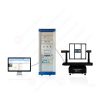
Goniofotômetro de luminária de rotação de alta precisão
LSG-1890B
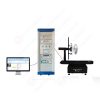
Goniospectroradiômetro de luminária de rotação de alta precisão
LSG-1890BCCD

Goniofotômetro para lâmpadas automotivas e de sinal
LSG-1950
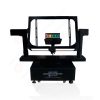
Goniofotômetro para lâmpadas de semáforos (modelo econômico)
LSG-1950S
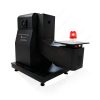
Dispositivo de alerta visual de alarme de incêndio VAD Goniofotômetro
LSG-1930
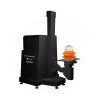
Goniofotômetro para iluminação de aeródromos
LSG-1940
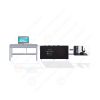
Goniofotômetro compacto
LSG-1200A
Goniofotômetro LED
LSG-1100
Goniopotômetro com detector de movimento de campo próximo
LSG-1900B
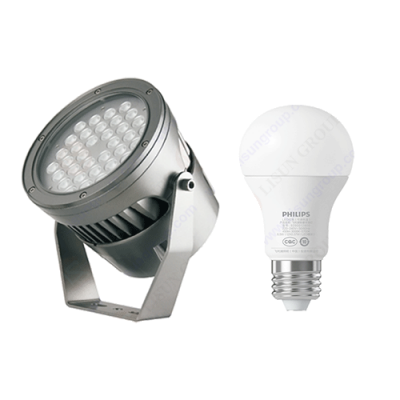 Soluções de teste de LEDs e luminárias
 LM-79 e LM-80 Soluções de teste
 Soluções de teste de driver de LED
 Soluções de teste para eletrodomésticos
 Soluções para testes móveis e de rede
 Soluções para testes de eletrônicos automotivos
 Soluções de teste de áudio e vídeo e TI
 Soluções para testes de cabos e fios
 Soluções de teste de plugues e soquetes
 Soluções de teste de interruptores de energia
 Soluções de teste de transformadores
 Soluções de teste para brinquedos elétricos
 Soluções de teste de medidores de energia
 Soluções de teste de ferramentas motorizadas
Selecione uma organização
para navegar pelos padrões
Abstrato:
Espectrômetro EDXRF (Energy Dispersive X-ray Fluorescence Spectrometer) is based on the physical phenomenon that characteristic X-rays are emitted when samples are excited by high-energy X-rays. It identifies elements contained in the sample according to the difference in wavelengths of characteristic X-rays of different elements, and determines the elemental content in the sample by comparing the spectral line intensities of different elements. Taking LISUN EDX-2A EDXRF spectrometer as the research object, this paper describes its working principle, system composition, quantitative analysis method and typical applications in RoHS testing, elemental analysis and coating thickness measurement. Tables are provided to list characteristic spectral energies of common elements, RoHS limit values and main instrument parameters, so as to provide technical references for hazardous substance screening and material composition detection of electrical and electronic products.
1 Introdução
With the continuous tightening of environmental regulations such as RoHS for electrical and electronic products and the growing demand for precise material composition detection, rapid, non-destructive and simultaneous multi-element analytical methods have attracted wide attention. As a rapid screening method specified in *Test Method for Hazardous Substances in Electronic Information Products* (SJ/T 11365-2006), X-ray fluorescence spectrometry (XRF) can complete the determination of lead (Pb), mercury (Hg), cadmium (Cd), chromium (Cr), bromine (Br) and other elemental contents within a few minutes. EDXRF spectrometer distinguishes spectral lines directly by detector based on energy without dispersive crystals. It features compact structure and fast measurement, and has become a common instrument for RoHS screening and alloy analysis. LISUN EDX-2A EDXRF spectrometer is a typical device integrating three functions: RoHS testing, elemental analysis and coating thickness measurement.
2 Princípio de Trabalho
The core working principle of EDXRF spectrometer can be summarized in two aspects. First, qualitative identification: when the sample is irradiated by primary X-rays generated by an X-ray tube, inner-shell electrons of atoms in the sample are excited and transition. Outer-shell electrons fill the vacancies and release characteristic X-rays whose energy equals the energy difference between two energy levels. Owing to the different atomic structures of various elements, the wavelengths (energies) of their emitted characteristic X-rays are different. Therefore, the elements contained in the sample can be identified according to the wavelength (energy) of characteristic spectral lines. Second, quantitative determination: under identical excitation and measurement conditions, the spectral line intensity of a specific element is proportional to its content in the sample. Hence, the elemental content in the sample can be determined by comparing the spectral line intensities of different elements. The EDX-2A is equipped with a high-resolution detector and multi-channel analysis system. It counts characteristic X-ray photons according to energy distribution to form an energy spectrum, and then the software recognizes spectral peaks and integrates peak areas to complete qualitative and quantitative analysis.
Table 1 shows the energy and wavelength of characteristic X-ray spectral lines of commonly tested elements for RoHS.
| Element | Número atômico | Main Spectral Line | Energy / keV | Wavelength / nm |
| Cr (cromo) | 24 | Kα | 5.41 | 0.229 |
| Br (Bromine) | 35 | Kα | 11.92 | 0.104 |
| Pb (chumbo) | 82 | Lα | 10.55 | 0.118 |
| Hg (Mercúrio) | 80 | Lα | 9.99 | 0.124 |
| Cd (cádmio) | 48 | Kα | 23.17 | 0.054 |
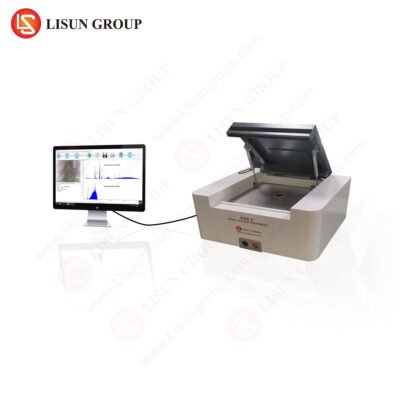
EDX-2A_Equipamento de teste RoHS
3 Instrument System and Main Parameters
O EDX-2A EDXRF spectrometer consists of an X-ray excitation source, sample chamber, high-resolution detector, multi-channel analyzer and data processing software. It is also built-in with high-definition camera and chamber lighting to observe the test position of samples in real time. The main technical parameters of the instrument are shown in Table 2.
| Item de Parâmetro | Especificação técnica |
| Dimensão total | 610×320×100 mm (L × W × H) |
| Tamanho da câmara de amostra | 510×310×120 mm (non-vacuum) |
| Tamanho da câmara de vácuo | Φ100 × 70 mm |
| Tubo de raios X | 50 kV / 600 μA, auto-setting |
| Applicable Sample Form | Sólido, líquido, pó |
| Content Detection Range | 2 ppm – 99.99% |
| Analyzable Element Range | S(16)–U(92) (non-vacuum); Na(11)–U(92) (vacuum) |
4 Quantitative Analysis Method
Quantitative measurement adopts the strategy of “calibration with standard samples — spectral intensity comparison”. Firstly, standard samples with known contents are used to establish a working curve, which represents the functional relationship between elemental content and net intensity of characteristic spectral lines. When testing unknown samples, the instrument calculates elemental contents by looking up the working curve based on measured spectral line intensities. For RoHS screening, corresponding standard samples can be used for accurate testing of Pb, Hg, Cd, Cr and Br in accordance with SJ/T 11365-2006. The EDX-2A is delivered with pure silver sample and EU standard samples (with EU calibration certificate) for calibration and self-inspection by users. The limit requirements for hazardous substances in homogeneous materials under RoHS Directive (2011/65/EU, RoHS 2.0) are listed in Table 3.
| Substância Restrita | Valor limite |
| Chumbo (Pb) | 0.1% (1000 ppm) |
| Mercúrio (Hg) | 0.1% (1000 ppm) |
| Cádmio (Cd) | 0.01% (100 ppm) |
| Cromo Hexavalente (Cr VI) | 0.1% (1000 ppm) |
| Bifenilos polibromados (PBB) | 0.1% (1000 ppm) |
| Éteres difenílicos polibromados (PBDE) | 0.1% (1000 ppm) |
Aplicações típicas 5
O EDX-2A supports three typical applications on one instrument. First, RoHS testing (models EDX-2A, EDX-2AB, EDX-2AC, EDX-2ABC, EDX-2T), suitable for RoHS 1.0 detection of electrical and electronic products, components, plastics and plastic parts. Second, alloy analysis (EDX-2AB, EDX-2ABC, EDX-2T). It can test iron, copper, stainless steel, gold, platinum and other metals. It can analyze elements from S to U under non-vacuum condition and Na to U under vacuum condition, and output absolute elemental contents. Third, coating thickness measurement (EDX-2AC, EDX-2ABC, EDX-2T). It calculates absolute coating thickness by measuring characteristic spectral intensity of coating elements, and applies to quality control of electroplating layers and coatings. This series features high resolution, imported core components from Europe and America, power overcurrent and short-circuit protection, automatic test control, and complete after-sales technical support accumulated through long-term industrial applications.
Conclusão 6
Espectrômetro EDXRF identifies elements by characteristic X-ray wavelength and quantifies elemental contents by spectral line intensity, realizing non-destructive, fast and simultaneous multi-element detection. LISUN EDX-2A can be switched to RoHS tester, metal elemental analyzer and coating thickness gauge via software configuration. Its detection range covers 2 ppm – 99.99%, meeting diversified requirements such as hazardous substance screening for electrical and electronic products, alloy composition identification and coating thickness measurement. It serves as a reliable tool for quality control in laboratories and production lines.
Tag:EDX-2ASeu endereço de email não será publicado. Campos obrigatórios são marcados *

 Inglês
 中文简体
 Русский
 Español
 Português
 Türkçe
 العربية
 Deutsch
 Polski
 Italiano
 Français
 한국어
 ไทย
 Tiếng Việt
 日本語