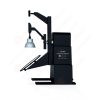
LM-79 Goniofotômetro Detector Móvel (Espelho Tipo C)
LSG-6000
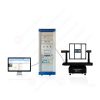
Goniofotômetro de luminária de rotação de alta precisão
LSG-1890B
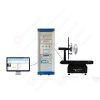
Goniospectroradiômetro de luminária de rotação de alta precisão
LSG-1890BCCD

Goniofotômetro para lâmpadas automotivas e de sinal
LSG-1950
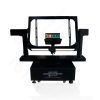
Goniopotômetro para lâmpadas de sinalização de trânsito
LSG-1950S
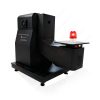
Dispositivo de alerta visual de alarme de incêndio VAD Goniofotômetro
LSG-1930
Goniofotômetro compacto
LSG-1200A
Goniofotômetro LED
LSG-1100
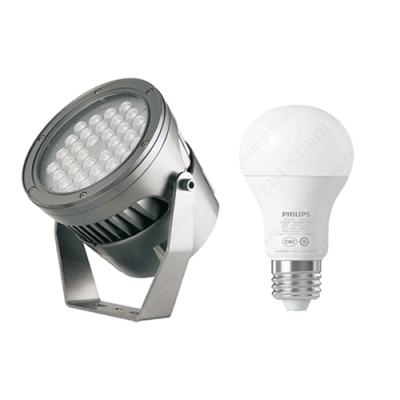 Soluções de teste de LEDs e luminárias
 LM-79 e LM-80 Soluções de teste
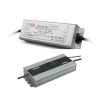 Soluções de teste de driver de LED
 Soluções de teste para eletrodomésticos
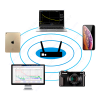 Soluções para testes móveis e de rede
 Soluções para testes de eletrônicos automotivos
 Soluções de teste de áudio e vídeo e TI
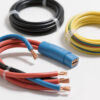 Soluções para testes de cabos e fios
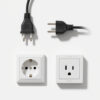 Soluções de teste de plugues e soquetes
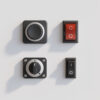 Soluções de teste de interruptores de energia
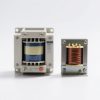 Soluções de teste de transformadores
 Soluções de teste para brinquedos elétricos
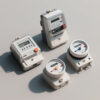 Soluções de teste de medidores de energia
 Soluções de teste de ferramentas motorizadas
Selecione uma organização
para navegar pelos padrões
Sumário
The performance evaluation of lighting products relies on the acquisition of complete photometric, colorimetric and electrical indicators. As core instruments for lighting inspection, LED test equipment supports comprehensive performance testing of both conventional gas light sources and solid-state LED light sources. Taking the LISUN LPCE-2 LED CCD Rapid Photometric, Colorimetric & Electrical Comprehensive Test System as the research object, this paper analyzes its system architecture composed of high-precision spectroradiometer and integrally formed integrating sphere. This LED test equipment enables testing of energy-saving lamps, fluorescent lamps, HID lamps including high-pressure sodium lamps and high-pressure mercury lamps, cold cathode fluorescent lamps and LED lamps. Quantitative quality evaluation of LED products can be realized through complete photometric, colorimetric and electrical parameter measurement. The test data complies with domestic and international lighting standards such as CIE, LM-79 and GB/T 24824, providing standardized testing solutions for light source R&D, factory quality inspection and export certification.
With the popularization of solid-state lighting, LED luminaires and conventional gas discharge light sources are widely adopted in residential, roadway and industrial applications. Different light sources have distinct luminescence mechanisms, making it difficult for a single testing instrument to satisfy all testing requirements. There is no unified visual judgment standard for LED products. Comprehensive evaluation of quality must be carried out via photometric, colorimetric and electrical parameters such as luminous flux, correlated color temperature, color rendering index and power factor. Without accurate LED test equipment, mass quality problems including color deviation, substandard energy efficiency and rapid light decay may occur. Traditional split photometric instruments feature complicated operation, and spliced integrating spheres introduce large reflection errors, failing to collect optical and electrical data simultaneously. The LISUN LPCE-2 Equipamento de teste de LED integrates spectrum detection, diffuse reflection integrating sphere and electrical parameter acquisition modules. It supports testing of multiple types of light sources and outputs complete test reports in one stop, and is widely deployed in lighting enterprise laboratories and third-party testing institutions.
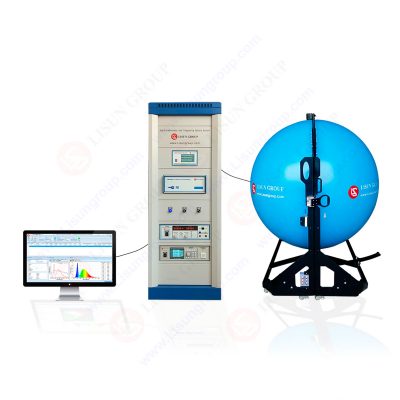
Sistema Esfera Integrado Espectroradiômetro de Alta Precisão LPCE 2 (LMS 9000)
Core Hardware Configuration of the System
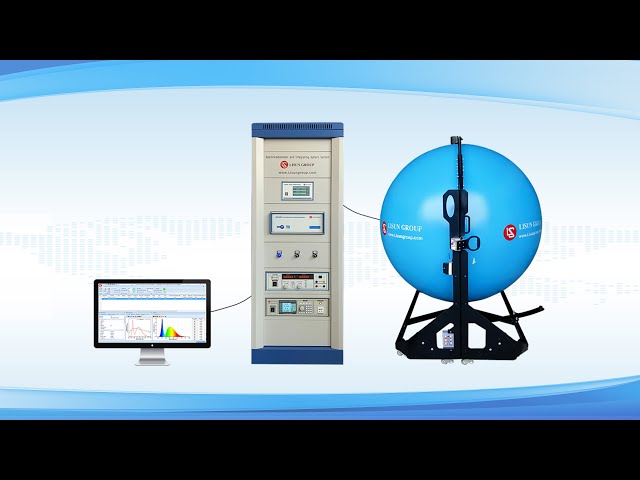
The complete LED test equipment consists of LMS series high-precision CCD spectroradiometer, integrally formed integrating sphere, digital electrical parameter analyzer, AC/DC variable frequency power supply and standard calibration light source. The integrally formed integrating sphere has no splicing gaps, and the inner wall with high diffuse reflectance coating reduces light loss, delivering higher measurement accuracy than conventional spliced structures. The Hamamatsu cooled CCD detector minimizes stray light interference, controlling measurement errors of wavelength and chromaticity coordinates within a narrow range. Optical, chromatic and electrical data of light sources can be collected synchronously without repeated testing.
Compatible Light Source Types for Testing
This LED test equipment supports testing of all mainstream lighting sources: luminous efficacy and color rendering testing for energy-saving lamps and linear/circular fluorescent lamps; luminous flux measurement for roadway HID light sources such as high-pressure sodium lamps and high-pressure mercury lamps; spectrum analysis for backlight cold cathode fluorescent lamps; full-parameter testing for LED chips, modules and finished luminaires. For LED light sources, LM-80 luminous flux maintenance aging testing can be additionally performed to record attenuation of luminous flux, color temperature and power during long-term operation.
Comparison of Core Testing Indicators for Different Light Sources
The table below lists key measurement parameters of various light sources measured by LED test equipment, showing differences in testing priorities between traditional light sources and LED light sources:
| Tipo de fonte de luz | Core Photometric Indicators | Core Colorimetric Indicators | Core Electrical Indicators | Special Testing Items |
| HID High-pressure Gas Lamps | Total luminous flux, radiant power | CCT, color rendering index | Operating voltage, power | Long-term light decay monitoring |
| Fluorescent Lamps & Energy-saving Lamps | Luminous efficacy, pupillary flux | Chromaticity coordinates, color tolerance | Power factor, harmonic | Instant startup parameter test |
| Cátodo frio lâmpadas fluorescentes | Low luminous flux, spectral distribution | Peak wavelength, half bandwidth | Driving current fluctuation | Backlight uniformity analysis |
| Fontes de luz LED | Luminous efficacy WPE, PAR flux for plant lighting | TM30, CQS, color rendering index Rf | Current, power, DF phase shift coefficient | LM79, LM80 luminous flux maintenance test |
The quality of LED products cannot be distinguished visually. Each parameter directly affects user experience and compliance. Among photometric parameters, luminous efficacy and luminous flux reflect energy-saving performance and are relevant to EU ErP energy labeling application. Chromaticity parameters including chromaticity coordinates, correlated color temperature and color rendering index influence indoor lighting comfort, and high-CRI products are widely used in supermarkets and medical scenarios. Electrical parameters such as power, harmonic and power factor determine circuit safety, and excessive harmonic causes grid pollution. The LISUN LPCE-2 LED test equipment can output all indicators in a single measurement. The built-in threshold judgment function in software automatically marks non-conforming items and eliminates errors caused by manual reading. Test reports support PDF and Excel export to meet document submission requirements of certification bodies.
. Equipment calibration: Calibrate integrating sphere and spectroradiometer with matched standard light source and input self-absorption correction coefficients;
. Specimen fixing: Select 0.3m or 1.5m integrating sphere according to light source size and place the luminaire steadily on the carrier;
. Driver configuration: Match output specifications of AC/DC power supply and set standard test current or voltage;
. Comprehensive testing: Start the program; the spectroradiometer and electrical parameter analyzer collect data synchronously and draw spectrum curves automatically;
. Result judgment: The software compares measured values with corresponding standard limits to judge pass or fail for LED or traditional light sources and save complete reports.
The whole procedure complies with LM-79, CIE177, GB/T 24824 and other specifications, and test results are recognized by third-party certification institutions.
During product R&D, engineers can compare photometric and color performance of different phosphor and chip solutions with this LED test equipment to optimize packaging and driver design. In mass production, it is applied for incoming and finished product sampling inspection to unify testing standards and steadily control energy efficiency and chromatic consistency of products. For export manufacturers, the equipment’s compatibility with international standards enables one-stop testing required by EU ErP, North American LM series certifications and reduces procurement cost of multiple instruments. The equipment is suitable for general lighting, plant growth lights, automotive light sources, industrial backlights and other segments. Accurate photometric, colorimetric and electrical data helps reduce failure risks of light source products from the source.
Photometric, colorimetric and electrical parameters are the only quantitative basis to evaluate the quality of LED and various traditional light sources, and professional Equipamento de teste de LED is essential for quality control in the lighting industry. Equipped with high-precision spectroradiometer and integrally formed integrating sphere, the LISUN LPCE-2 LED CCD Rapid Photometric, Colorimetric & Electrical Comprehensive Test System supports testing of energy-saving lamps, fluorescent lamps, HID lamps, cold cathode fluorescent lamps and LED light sources. It collects complete photometric, colorimetric and electrical indicators in one stop, and all measurement accuracy meets mainstream global lighting standards. The equipment covers multiple scenarios including R&D sample analysis, mass delivery inspection and third-party compliance certification. Standardized and automatic testing eliminates manual errors and provides reliable hardware support for performance evaluation, structural optimization and market access of various light source products.
Tag:LPCE-2 (LMS-9000)Seu endereço de email não será publicado. Campos obrigatórios são marcados *

 Inglês
 中文简体
中文简体 Русский
 Español
 Português
 Türkçe
 العربية
 Deutsch
 Polski
 Italiano
 Français
 한국어
한국어 ไทย
ไทย Tiếng Việt
 日本語
日本語